Back to blog
Lead Generation Marketing: Workable Tactics and Steps to Create a Strategy


Lead Generation in Digital Marketing: Sad Statistics
Businesses cannot grow without clients, and to attract clients, a business needs to build a sales funnel. Marketers are the key figures who stand by the funnel and feed it through the top. To make it effective, specific lead generation marketing strategies should be used and applied according to business aims, values, and processes.
The sad statistics say that although 85% of marketing experts acknowledge lead generation tactics the most significant element in their arsenal, only 42% of entrepreneurs have active plans in force. Today we have prepared hints for you to help improve the situation.

What Is Lead Generation Marketing?
Let’s find out what is lead generation in marketing and learn how to engage and capture the attention of your target audience, turning them into leads and making potential customers take a step to enter your sales cycle.
Below, you can find some tactics to use — keep in mind that modern advertising platforms and advanced technologies have benefited greatly by shifting from old-style media sources to the digital domain.
Steps to Create a Workable Lead Generation Marketing Plan
1. Define your target clients
To define who your real targets are, research. Start with your current consumers. Scrape data about them, interview them, ask for feedback, find out their background, goals, challenges, and major pains they face. With all this information in mind, you will have a clear picture of what tactics you should use, which messaging to choose, and which traffic channels to prioritize.
2. Set goals for your campaign
Lead generation in digital marketing should have a visual goal, criteria, and benchmarks. You should clearly know what number of visits you expect, how many leads you want, what conversion rate you’re aiming for, etc. You should also have an exact timeframe for reaching the desired results.
3. Form an offer to attract your ideal customer
Once upon a time, giving stuff away for free online became a workable lead generation marketing plan, but common e-books, checklists, or white papers do not work as well as they used to. Consumers have become more selective, and now you must be really helpful to your prospects to catch leads.
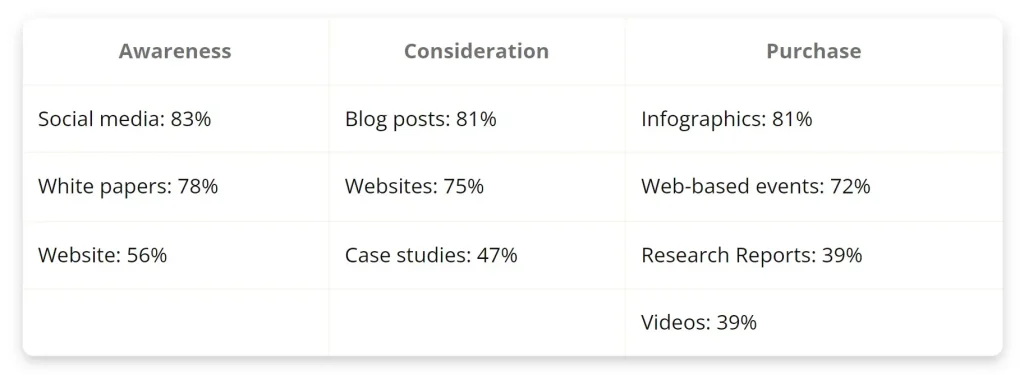
Each stage of the customer journey has specific content that works best to generate leads: white papers, sites, and online events should be used at the consideration stage, while research reports, case studies, and videos are most motivating for purchase.
4. Design a perfect landing
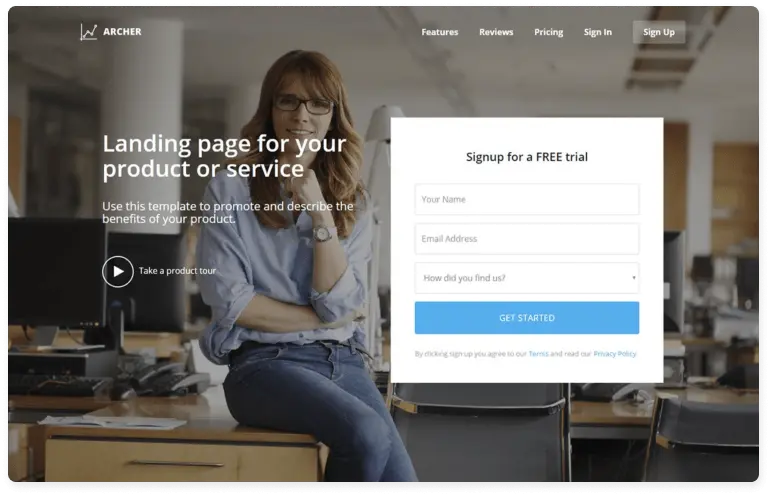
A post-click landing comes in when you try to convince your target clients to make the first step and download your content or take advantage of your free offer. To be persuasive enough, it should contain the following elements:
- A benefit-focused headline
- Some engaging media (pictures, images, infographics, and videos)
- Skimmable copy (break text in blocks & small paragraphs, use bullet points, outline the most important data)
- Social proof (real client testimonials, feedback, reviews, plus authority badges & case studies)
- A well-designed and laconic form
- An attention-grabbing call-to-action button
5. Craft a “thank you” webpage
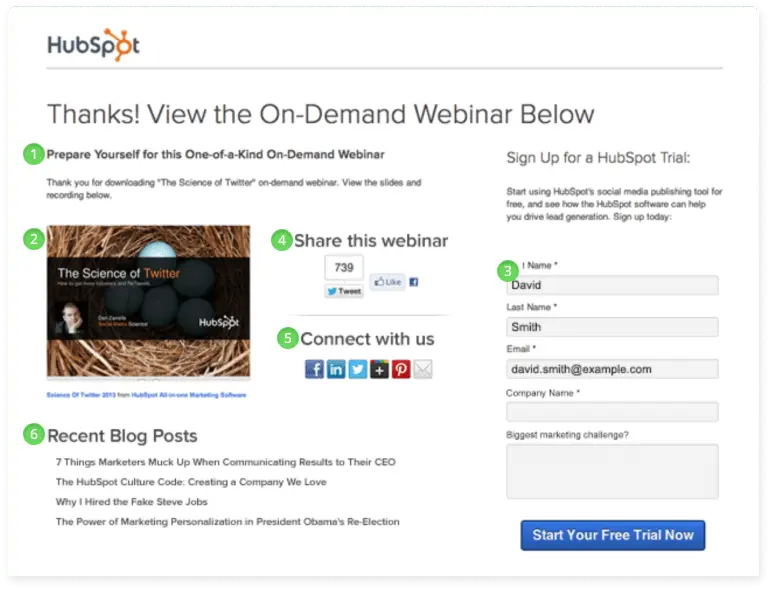
After a user has claimed your offer, continue a conversation with him through a “thank you” page. You need it not only to show your gratitude to the users who have accepted the offer, but to let them know where to get it (download right away, in email, etc.). This will also give your leads a feeling of being a vital part of your company and possibly to drive them to another useful resource.
6. Integrate with technology
To accomplish your lead generation marketing strategy better, integrate with CRMs and other software solutions for marketing, remarketing, tracking leads, data scraping, and more. Note that there is no one-size-fits-all solution — the choice of tools depends on the peculiarities of your business, its size, processes, goals, niche, etc.
7. Test the ad campaign
Start testing your marketing lead generating campaign from checking the front- and the back-end you have prepared, ensure that everything looks like it is supposed to. Confirm that the succession of steps is right, all the links are clickable and correct, the CTA button operates and the retarget works for those who try to leave the page.
8. Drive traffic
With traffic, you will never have a universal way to direct it exactly as you would like to, so the methods you use should be based on your most profitable channels, business specifics, and buyer persona.
9. Analyze and optimize
Test your campaigns continuously. Disruptive Advertising conducted a study that revealed that average clients waste over 75% of their PPC budget. Use the analytic tools available, conduct A/B testing, gain insights, and optimize your headlines, texts, and forms, or choose alternative traffic sources. To avoid budget loss, learn to spot the slightest signs of bad traffic, and always keep a close watch on key campaign metrics.
Lead Generation in Digital Marketing: Fundamental Methods
A website form
You may encourage your target users to fill in the form in exchange for some valuable offer (a piece of content, newsletter, free session, and more.)
Lead capture procedure is blended here with your site design, so keep it in mind and follow our advice above.
Targeted advertising is nowadays an effective way of marketing leads generation if the campaign is set correctly. It is not enough to target the keywords on Google that people search for, but also to focus on the right customer persona and capture those users who are likely to become your clients.
How Lead Gen Ads Work
Emails
Email marketing for lead generation is helpful when you manage to interest your addresses with a catchy subject. They also work well when you offer potential customers something valuable: a free trial, a promo, some persuasive promise of return on investment.
Generally, email marketing lead generation campaigns should be a well-thought-out part of the overall corporate marketing plan.

Social media
Social network marketing for lead generation is often simple, yet effective, since the users surf social networks on an average of 5-6 hours a day. They not only communicate with family or friends, but also share opinions, take part in discussions, and actively interact with brands. Parsing social media networks helps to spot the target audience as well as competitors.
You can take advantage of this information for social network marketing leads generation and capture the leads through the act of developing your community, taking part in similar groups or pages, creating contests, and advertising.
Basic Tactics For Lead Generation Content Marketing
– X steps to …
– a checklist to consider in some situation
The type of content that engages and correlates with the industry.
The Role of Scraping in Lead Generation
As a common practice, sales teams spend days building a prospect list — researching company names, finding leaders, verifying contacts. When the list is done, half of the records can already be outdated. The reason for this is the lack of reliable and current data about leads within easy reach.
The role of web scraping is to solve exactly this problem. It extracts publicly available information from multiple sources: directories, job boards, company websites, and social platforms — structured & classified or raw, depending on preferences. Extracted data is a method to inform you who is hiring, who is growing, and who just raised funding. All signals that a company is ready to buy something.
Considering every stage of the funnel, let’s see how scraping works specifically for lead generation:
- It builds prospect lists from verified public sources.
- It enriches existing contacts with company context and background: size, industry, tech stack.
- It tracks behavioral signals that indicate purchase intent.
In the result, it consists of a sharp list, and a sales team can take it into work without delay.
Use Cases and Categories
Lead generation scraping is applicable in various industries with the same logic: better data provides better targeting.
Job & HR. A CRM vendor or a sales training provider can expect a warm prospect when a company announces the hiring of 30 new sales roles and active scaling of its revenue team. Scraping job boards surfaces similar triggers, long before a competitor makes contact.
B2B sphere. Business directories, LinkedIn profiles, and company registries are rich with structured contact data. Scraped and processed correctly, this information enriches CRMs with verified names, titles, and company details, reducing the time sales teams spend on manual research significantly.
E-commerce and retail. Brands track competitor pricing, product availability, and customer reviews. Scraping helps marketing teams understand where their offer is winning and where it is not by providing information about positioning.
Real estate. Agencies analyze listing data from multiple platforms to find sellers at the right moment. In real estate, timing means everything.
Finance. Institutions collect public financial records and regulatory records to qualify enterprise leads and assess risk early.
Social media and trends. A forum user posting about a problem your product solves is a potential lead. Even so they have not filled out a form, their intent exists. Monitoring brand mentions and community discussions can reveal these prospects before they ever reach a competitor’s website.
Each category operates on the same principle: structured data, collected consistently, reduces wasted spend campaigns toward prospects who actually convert.
DataOx’s Services for Lead Generation Marketing Strategy
There is no fixed formula, no one-stop solution or plan for lead generation marketing strategy. It is vital to keep in mind that the process may involve various platforms, approaches, and tools.
However, when capturing your first leads, you can always create lookalike audiences and scale your campaigns accordingly. Testing and data analysis should be integral aspects of your overall lead generation marketing policy. We are eager to help you get the data you need and share our experience in data handling with you for even better results. Schedule a free consultation with a DataOx expert today!

web scraping services
Get free consultation
FAQ about Lead Generation Marketing
What is lead generation marketing and what is its role in a larger sales strategy?
Lead generation marketing is the process of attracting potential customers and moving them into a sales cycle through targeted content, digital channels, and data-driven outreach. It covers everything from landing page design and CTA structure to email campaigns and web scraping-based prospect lists. DataOx’s goal is not to generate traffic, but rather to provide qualified interest to B2B companies during the data access process.
What is the difference between content marketing lead generation and paid advertising?
Content marketing lead generation relies on organic channels (blogs, newsletters, webinars, and downloadable assets) to attract prospects over time. Paid advertising captures demand faster but burns budget quickly without precise targeting. Both require the same basement: accurate data about who your buyer persona is. DataOx provides that foundation through structured data extraction from public sources, reducing wasted spend on campaigns directed at the wrong audience.
Which digital channels produce the highest ROI in a lead generation marketing strategy?
In digital marketing, web scraping is one of the most effective methods for B2B lead generation because it extracts structured prospect data from directories, job boards, and company registries at scale. Email marketing and LinkedIn follow for outreach. Blog content and webinars serve the top of the funnel. The channel mix depends on the industry and buyer persona. DataOx clients in HR, real estate, finance, and e-commerce rely on scraping as the foundation of their data, which is then built on by other channels.
How does web scraping support a lead generation marketing plan at each funnel stage?
At the top of the funnel, scraping builds prospect lists from verified public sources. In the middle, it enriches existing contacts with company size, industry, tech stack, and hiring signals. At the bottom, it tracks behavioral triggers, such as funding announcements, job postings, leadership changes that indicate purchase intent. DataOx structures extracted data for direct CRM integration, so the sales team receives a sharp, ready-to-use list at every stage.
Can a small B2B team run lead generation marketing without a dedicated marketing department?
Yes, and web scraping, as a highly effective channel for B2B lead generation in digital marketing, is the main reason it is realistic. Data extraction can fully automate prospect research, contact enrichment, and list building, which are the three most time-consuming parts of any lead generation marketing plan. What remains is outreach and qualification, which a small team can handle. DataOx builds custom scraping solutions adapted to your target industry, buyer persona, and CRM format — so the team starts with a verified, structured prospect list. Schedule a free consultation to discuss your specific case!
Stay ahead with data insights
Subscribe to DataOx newsletter




get a free consultation
Fill out the form — we'll get back to you with options tailored to your needs.
what happens next
We review your goals and get in touch to clarify scope
Your privacy is a priority — NDA available upon request.
You receive a clear proposal with timeline, budget, and delivery format.
Once approved, we start building your data pipeline.


contact us
Let's find the best solution for your data needs.

get a free consultation
Fill out the form — we'll get back to you with options tailored to your needs.
what happens next
We review your goals and get in touch to clarify scope
Your privacy is a priority — NDA available upon request.
You receive a clear proposal with timeline, budget, and delivery format.
Once approved, we start building your data pipeline.
contact us
Let's find the best solution for your data needs.